
The Lie That Fits on a Protest Sign
For many young people, abortion is not first introduced as a moral question.
It is introduced as a solution.
A way to stay on track. A way to protect the future. A way to avoid disappointing parents, losing a scholarship, changing plans, or becoming the subject of whispers and judgment.
The language is familiar by now.
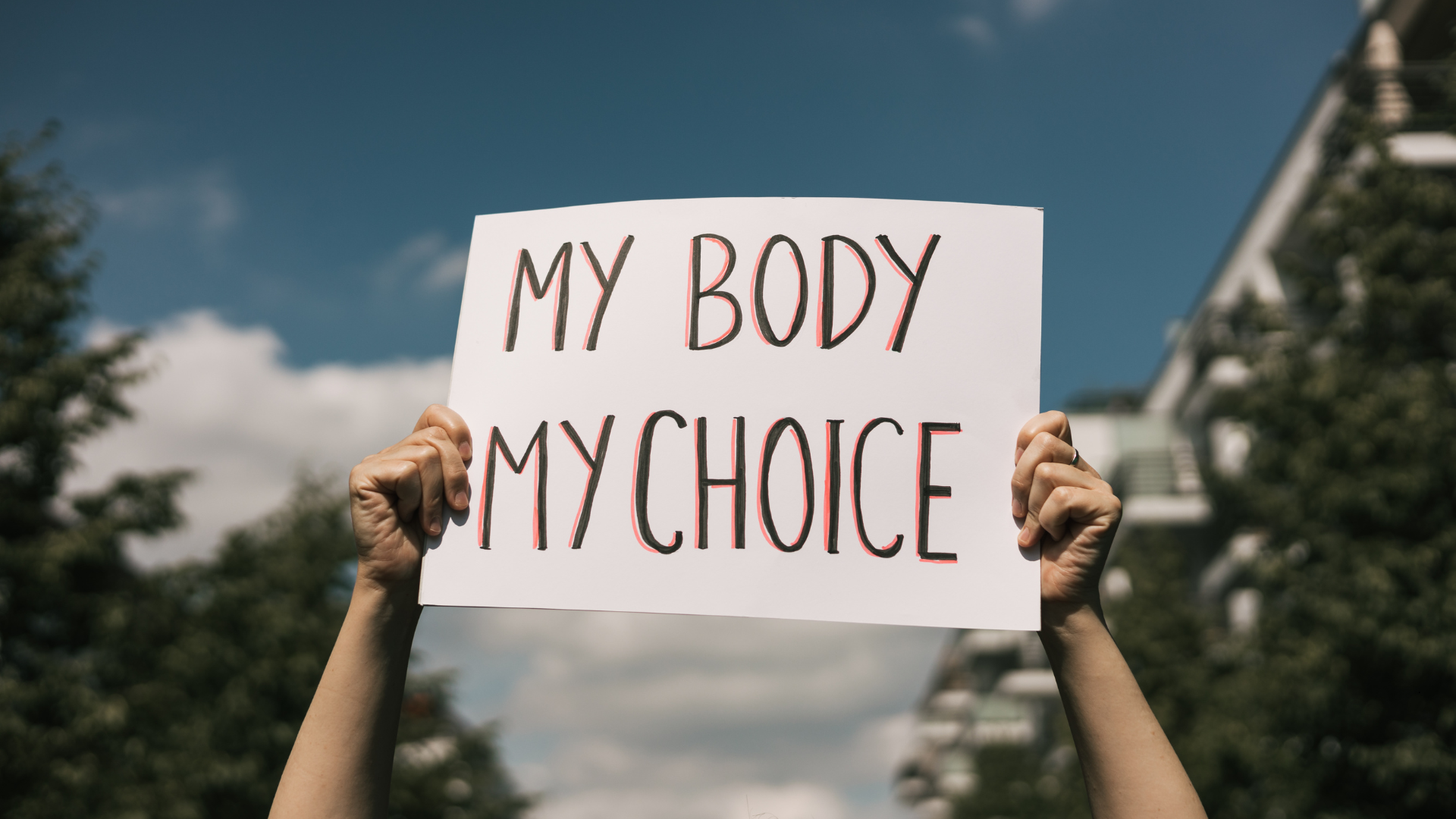
My body, my choice. Abortion is healthcare. Protect reproductive freedom.
Short phrases, repeated often enough, can begin to sound like truth. And for a young woman facing an unexpected pregnancy, those words can feel less like politics and more like a lifeline.
That is what makes the lie so powerful. It rarely sounds cruel. It sounds compassionate.
But slogans are designed to be simple. Life is not.
In a two-part Speak Up! Virginia conversation, Leslie Blackwell tells a story that does not fit neatly on a protest sign. She was not someone who misunderstood the pro-abortion movement from a distance. She lived it. She defended it. She once described herself as a radical pro-choice feminist. She had worked in television and public relations, pumped out pro-choice messaging, and was only a month away from joining the board of the Virginia League for Planned Parenthood.
Then God began changing her heart.
In Part 2, Leslie names the lies she once believed and now spends her life warning women about.
The first lie: abortion will solve your problem.
For a young woman in crisis, that promise can sound like rescue. It says: You can make this go away. You can keep your plans. You can still become who you were supposed to be. You do not have to tell anyone. You do not have to be afraid.
But Leslie knows what comes after that promise fails.
She carried the secret regret of two abortions for years. The grief did not simply disappear. It stayed buried until the death of her father brought unresolved pain back to the surface. Under a weeping willow tree, while her marriage was strained, her son had recently been kicked out of college, and her life felt like it was unraveling, Leslie says God met her in a powerful way.
In that moment, she finally connected the pain she had carried to the lives she had lost. The problem had not disappeared. It was the root of her self-destructive behavior.
The second lie: the baby is just a glob of cells and tissue.
That phrase may be repeated in classrooms, clinics, and political campaigns, but repetition does not make it true. Leslie says plainly what she finally had to face: it was a child. It is a baby.
This lie matters because language shapes conscience. If the child can be reduced to tissue, abortion can be reduced to a procedure. If the child is nameless, faceless, and unseen, the decision can be made to sound clinical instead of human.
But truth has a way of breaking through the words we use to hide from it.
The third lie: abortion has no lasting impact.
That may be the most convenient lie of all. It allows the abortion industry to keep promising freedom without accounting for the women and men who later suffer in silence. Leslie speaks with urgency about healing because she knows secrecy can become its own prison. She eventually found help through an abortion recovery retreat with other women who had experienced abortion; and now points the younger generations toward abortion recovery resources because there is no reason for people to suffer alone.
That is what makes Leslie’s testimony so important for Christians and pro-life advocates who want to reach the next generation. Christians must expose the lie without abandoning the person who has believed it.
We cannot assume young people have been taught the truth about life in the womb. We cannot assume they understand the physical, emotional, and spiritual weight of abortion. And we cannot assume they know where to turn when they are afraid.
She needs to know that her child is not the end of her future—but rather the opposite, the beginning!She needs to know that motherhood is not a failure. She needs to know that her life still has dignity, purpose, and support. She needs someone willing to walk with her, not just win an argument about her.
Because behind every slogan is a real person facing a real decision—often in fear, often alone.
And if young women are being handed slogans, the pro-life movement must be ready to offer something stronger: not just arguments, but presence; not just conviction, but compassion; not just truth spoken, but truth lived out in a way that makes choosing life feel possible.